BroadReach Construction Machinery Co., Ltd







2025 Annual Review: Southeast Asia Excavator Market Report (Import & Export Dynamics)
Table of Contents
Southeast Asia excavator market trends in 2025 revealed critical structural shifts that continue to reshape the global construction machinery industry. As we move through 2026, analyzing complete data from the previous year is essential to understanding regional demand. This retrospective report delivers a comprehensive review of the Southeast Asia excavator market, highlighting the import and export dynamics across four pivotal nations: Indonesia, Vietnam, the Philippines, and Malaysia.

1. Import Scale: Indonesia Establishes Overwhelming Regional Dominance
When evaluating the market size by import value, Indonesia vastly outperformed the other three major nations within the Southeast Asia excavator market. To put this into perspective, in 2025, Indonesia’s total excavator import value was 1.4 times the combined aggregate of Vietnam, the Philippines, and Malaysia.
2025 Excavator Import Overview by Country
| Country | 2025 Import Value (USD) | Year-on-Year (YoY) Growth | Market Characteristics & Insights |
| Indonesia | ~ $1.3 Billion | +20.5% | The undisputed powerhouse; driven by extensive mining and mega-infrastructure projects. |
| Vietnam | > $400 Million | +53.7% | Hyper-growth market; notably, second-hand/used equipment accounts for nearly 60% of total imports. |
| Philippines | > $300 Million | +29.5% | Robust double-digit growth backed by continuous government-led public works. |
| Malaysia | ~ $200 Million | +6.0% | A stable, mature market maintaining conservative but steady upward momentum. |
2. Sourcing Trends: The Duopoly of China and Japan
Analyzing the origins of machinery entering the Southeast Asia excavator market, China and Japan remain the absolute primary countries of origin. However, individual country dynamics showcase diverse procurement strategies among the four nations.

- Indonesia: Supply lines are highly concentrated. The top three import sources are China, Japan, and Thailand—collectively capturing 93% of the total market value. Remarkably, Chinese brands command nearly 70% of Indonesia’s total excavator imports.
- Vietnam: Sourcing heavily favors Japanese engineering. The top three origins are Japan, China, and South Korea (over 95% combined value), with Japan holding a majority share of over 53%. Interestingly, Indonesia ranks as Vietnam’s 5th largest source country, accounting for 0.7% of imports.
- the Philippines: China leads the supply structure here. The top three source nations are China, Japan, and South Korea, forming 85% of the total value. Sourcing from China represents nearly 70% of the volume. Indonesia claims the 5th spot with a 5.4% market share.
- Malaysia: Sourcing is well-distributed among major manufacturing hubs. China, Japan, and South Korea secure 81% of the total import market, with China holding nearly 50%. Indonesia positions itself as the 4th largest supply source at 7.3%.
Key Takeaway: Beyond its role as the largest machinery consumer in the Southeast Asia excavator market, Indonesia has successfully transitioned into a regional supply hub, securing a top-five import origin spot for Vietnam, the Philippines, and Malaysia.
3. Brand Landscape: Chinese OEMs Expand Domain in Mid-to-Heavy Segments
Brand competition within the Southeast Asia excavator market illustrates a distinct geographic divergence. Indonesia has heavily embraced Chinese Original Equipment Manufacturers (OEMs), whereas Vietnam and the Philippines maintain strong legacy affiliations with Japanese and South Korean brands.
Brand Performance & Market Shares
- Indonesia Market: The top three brands by value are SANY, Komatsu, and XCMG, which together capture over half of the market share. Within the top 10 brands, Chinese manufacturers hold five positions, exceeding 50% of the total market value (while the top 10 brands combined account for 88%).
- Vietnam Market: Legacy Japanese brands dominate the landscape. The top three brands are Komatsu, Hitachi, and Kobelco, taking over 57% of the total value. Chinese OEMs occupy three spots in the top 10, accounting for just over 10% of the market share.
- Philippines Market: A balanced competitive arena where the top three brands—Komatsu, Caterpillar, and Zoomlion—claim 47% of the market. Among the top 10 brands, Chinese brands secure four spots (22% share) closely trailing Japanese brands, which hold nearly 27%.
- Malaysia Market: Rapid adoption of highly cost-effective machinery. The top three brands by value are SANY, XCMG, and Hitachi, commanding nearly 40% of the market share. Meanwhile, Chinese OEM Zoomlion holds a strong 6th place position.
Strategic Insights on Chinese OEM Penetration
The data highlights significant differences in Chinese OEM penetration across Southeast Asia. Indonesia demonstrates the strongest acceptance of Chinese machinery brands, where they already command more than half of the leading market value. In contrast, Vietnam remains comparatively conservative, with Japanese manufacturers continuing to dominate purchasing preference and brand loyalty.
Overall, Chinese OEMs are steadily expanding their influence across mid- and heavy-duty excavator segments through competitive pricing, improving product reliability, and stronger regional distribution networks. However, market expansion remains uneven, as long-established brand recognition and customer trust continue to shape purchasing decisions in several Southeast Asian markets.
4. Export Acceleration: Supply Chain Localization Drives Regional Outflow
Outbound export data highlights that the Southeast Asia excavator market features a highly active manufacturing and export ecosystem, specifically led by Indonesia. In 2025, Indonesia’s excavator export value neared $300 million, representing a solid 15.4% YoY increase. Other regional players recorded relatively smaller export volumes: Vietnam achieved $40 million (+20.6% YoY), while both the Philippines and Malaysia recorded export values exceeding $3 million each.
In terms of export destinations, outbound supply from the Philippines and Malaysia primarily flows to the Asia-Pacific (APAC) and Europe, Middle East, and Africa (EMEA) regions. Conversely, producers based in Indonesia and Vietnam also have portions of their excavators exported to the Americas. Most notably, the United States has emerged as Indonesia’s largest excavator export destination, accounting for nearly 20% of its total export value.
5. Industrial Upgrades: Localized Assembly Plants Fueling Export Success
The market patterns within the Southeast Asia excavator market underscore that outbound export strength directly correlates with heavy capital investments in manufacturing infrastructure:
- Indonesia’s Hub Status: Outbound shipments are dominated by four major brands: Hitachi, Sumitomo, SANY, and Caterpillar, which collectively command 93.5% of Indonesia’s total export share. Crucially, all four corporations operate localized assembly and manufacturing plants in Indonesia. Furthermore, LiuGong’s Indonesian factory is scheduled to commence operations in 2026, which is expected to aggressively expand its domestic and regional footprint.
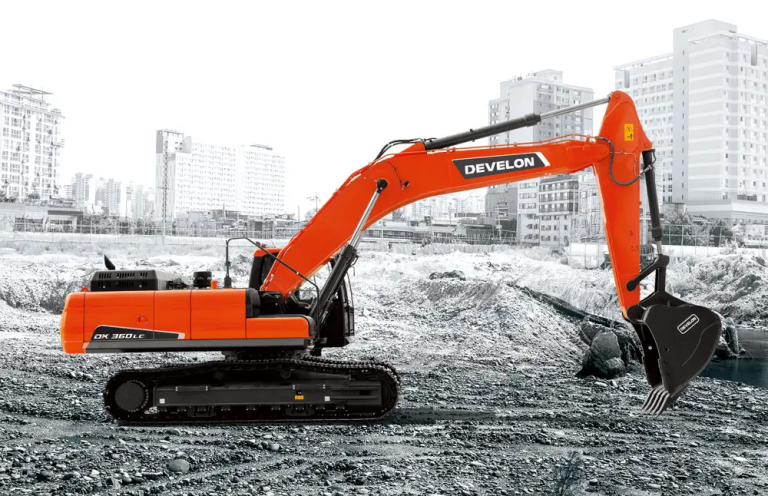
- Vietnam’s Structure: Exports are predominantly driven by East Asian heritage brands; Komatsu, Kobelco, Develon (Doosan), and Hitachi together secure over 78% of the export value.
- The Philippines’ Structure: Shows extreme brand consolidation, with Caterpillar, Hitachi, and Develon (Doosan) capturing an overwhelming 96% of the outbound market value.
- Malaysia’s Structure: Outbound machinery exports are led by the top three brands: Hitachi, Volvo, and SANY.
Conclusion for Fleet Managers & Dealers

Looking back at the 2025 data from our current vantage point in 2026, it is clear that the Southeast Asia excavator market is no longer merely a destination for heavy equipment consumption, but an increasingly vital node in the global manufacturing supply chain. For global buyers and equipment distributors, sourcing brand-new or high-quality machinery from top-tier Chinese OEMs (such as SANY and XCMG) or localized manufacturing hubs like Indonesia offers a highly optimized balance of technological maturity, rapid lead times, and cost efficiency.